
Rogaine
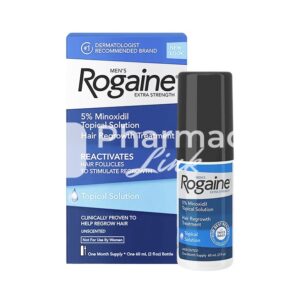
In brief
- Rogaine (minoxidil) can be purchased in Canada without a prescription as an over-the-counter product, including from pharmacies and retail stores, with topical forms commonly available for hair regrowth.
- Rogaine is used to treat androgenetic alopecia (pattern hair loss) in men and women. Its mechanism of action is not fully understood, but it is thought to stimulate hair follicles, prolong the growth phase of hair, and increase blood flow around the scalp.
- The usual dosage is 1 mL of 2% or 5% topical solution applied twice daily, or 5% foam applied as about half a capful twice daily.
- The form of administration is a topical solution or topical foam applied directly to the scalp.
- The effect usually starts gradually, with visible hair regrowth often taking about 4 to 6 months.
- The duration of action requires ongoing use; benefits are maintained only while treatment is continued, and stopping usually leads to renewed hair loss within a few months.
- There is no specific alcohol warning for topical Rogaine, but excessive alcohol use may worsen dehydration or scalp irritation; avoid ingesting the product, and do not use oral minoxidil with alcohol unless advised by a prescriber.
- The most common side effects are scalp irritation, dryness, redness, flaking, itching, and temporary increased shedding when treatment begins.
- Would you like to try Rogaine without a prescription?
Basic Rogaine Information
- INN (International Nonproprietary Name): Minoxidil
- Brand names available in Canada (English): Rogaine, Men’s Rogaine, Women’s Rogaine, Rogaine 5%, minoxidil topical solution, minoxidil foam
- ATC Code: D11AX01
- Forms & dosages: Topical solution 2% and 5%; topical foam 5%; oral tablet 2.5 mg and 10 mg
- Manufacturers in Canada (English): Kenvue Brands, Perrigo, Aurobindo Pharma, Taro, Apotex, Teva, Sun Pharma, Watson Labs, Pfizer, Bausch & Lomb, Hikma
- Registration status in Canada (English): Topical minoxidil is OTC; oral minoxidil is prescription only
- OTC / Rx classification: Topical minoxidil is non-prescription; oral minoxidil is prescription only
Safety First: Who Should Avoid Rogaine In Canada?
High-risk groups and red flags
Could this hair regrowth treatment be the wrong choice for some people?
Yes, and safety comes first with rogaine in Canada.
Do not use topical minoxidil if you are allergic to minoxidil or any excipient in the product, or if the scalp has open wounds, sunburn, infection, or active skin disease.
People with heart disease, fluid retention, older adults with thinner skin, and anyone already taking oral minoxidil for hypertension should be extra cautious because systemic effects are possible, even though they are uncommon with topical use.
Pregnancy and breastfeeding are also caution zones because safety has not been established, so avoidance is the prudent choice unless a clinician specifically directs otherwise.
For Indigenous patients, especially in communities where follow-up access can be limited, pharmacist or primary care support can make a real difference in spotting side effects early and choosing the right minoxidil hair loss Canada product.
- Do not use if you have an allergy to minoxidil or excipients.
- Do not use on broken, infected, sunburned, or inflamed scalp skin.
- Do not use without advice if you are pregnant or breastfeeding.
- Do not use without review if you have heart disease or fluid retention.
- Do not use if you are already on oral minoxidil unless a prescriber is supervising both treatments.
Driving, machinery, and workplace safety
Can a topical hair regrowth product affect work safety?
Usually not, but rare dizziness, light-headedness, or a rapid heartbeat can happen if enough minoxidil is absorbed systemically.
That matters in Canadian workplaces where people drive, work at heights, or operate machinery, because even a mild spell of light-headedness can become a safety issue.
If that happens, stop using the product until a pharmacist or clinician reviews it.
Oral minoxidil is a different situation altogether and should be discussed with a clinician before driving or doing safety-sensitive work.
Q&A — Can I drive after taking it in Canada?
With topical use, usually yes.
Do not drive if you feel dizzy, faint, or unusually unwell.
If oral minoxidil is being considered, ask a clinician for driving advice first.
What Rogaine Is Called In Canada
InN, brand names, and product types
Minoxidil is the INN, and rogaine is the common Canadian consumer name for the topical hair regrowth product.
Shoppers often search for minoxidil hair loss Canada or hair regrowth products Canada when comparing the 2% and 5% options.
In Canada, the familiar forms are Men’s Rogaine, Women’s Rogaine, Rogaine 5%, topical solution, and foam.
Globally, minoxidil appears under many brand names, but the active ingredient is the same.
- INN
- Minoxidil, the generic name used internationally.
- Topical solution
- A liquid applied to the scalp, usually with a dropper.
- Foam
- A lighter, foamy formulation that some patients find less greasy.
- Oral tablet
- A prescription tablet used for severe hypertension, not routine hair regrowth.
What it’s for
The topical product is used for androgenetic alopecia, also called pattern hair loss.
Oral minoxidil is a different medicine altogether and is prescription only for severe hypertension.
Legal Status And Health Canada Context
OTC versus prescription
For typical hair regrowth use, topical minoxidil is available over the counter in Canada.
That means most people do not need a prescription, although pharmacist guidance is still valuable for choosing between minoxidil topical solution and minoxidil foam.
Oral minoxidil remains Rx only and is reserved for cardiovascular treatment, not routine cosmetic hair loss care.
Health Canada approval and DIN labelling matter because they help identify legitimate Canadian products with traceability.
Packaging may also follow Canadian norms such as bilingual labelling in some provinces.
| Product Type | OTC Or Rx | Typical Use | Who Should Avoid It |
|---|---|---|---|
| Topical solution | OTC | Androgenetic alopecia | People with scalp wounds, infection, sunburn, or allergy |
| Foam | OTC | Androgenetic alopecia | Same cautions as topical solution |
| Oral tablet | Rx | Severe hypertension | People with major cardiovascular contraindications |
DIN and product identification
Check the Drug Identification Number on Canadian packaging before buying.
A DIN helps confirm that the product is authorised for the Canadian market and easier to trace if a recall or quality issue ever comes up.
Standard Canadian Dosing Guide
Usual regimens
How much rogaine should be used each day?
The usual adult regimen is 1 mL of 2% or 5% topical solution twice daily, or about half a capful of foam twice daily.
Visible benefit often takes 4 to 6 months, and treatment usually needs to continue to maintain results.
Stopping can lead to loss of regrowth within 3 to 4 months.
- Apply the product consistently at the same times each day.
- Use the measured amount, not extra.
- Apply to the scalp, not the hair shaft.
- Expect slow change rather than quick regrowth.
- Keep using it if it is helping, because maintenance is ongoing.
Dose adjustments and special populations
Most adults do not need routine topical dose changes.
Older adults may absorb more through thinner skin, so they should watch closely for irritation or systemic symptoms.
Topical use is generally not recommended under 18 years of age.
Kidney or liver impairment deserves extra caution, and medication review is especially important for patients with diabetes or cardiovascular disease.
Q&A — What if I miss a dose under my provincial drug plan?
Apply it when remembered unless it is almost time for the next dose.
Do not double up.
Provincial coverage does not change the missed-dose rule.
How Rogaine Works
Patient-friendly explanation
People often ask why this treatment works when no shampoo or vitamin did much.
Minoxidil helps support hair follicle activity and can prolong the growth phase.
It does not fix every cause of hair loss, and it will not reverse scarring alopecia or other scalp diseases that need different treatment.
- Less shedding may happen later rather than right away.
- New fine hairs often appear before thicker regrowth.
- Gradual thickening is more realistic than a dramatic overnight change.
Clinical framing
The ATC code for hair loss treatment is D11AX01, while oral minoxidil used systemically for blood pressure belongs to C02DC01.
Minoxidil first became known because hair growth showed up as a serendipitous side effect of the oral antihypertensive medicine.
Who Rogaine Is For And Who Should Not Use It
Approved and practical candidates
Topical minoxidil is used for androgenetic alopecia in men and women, depending on product strength and labelling.
Canadian shoppers may see wording such as hair regrowth treatment, minoxidil topical solution, or minoxidil foam on shelf tags and online listings.
The best candidates are people with pattern thinning who are able to apply it regularly for months at a time.
Contraindications and cautions
Absolute contraindications include allergy to minoxidil or formulation excipients, plus scalp wounds, infection, sunburn, or active dermatoses on the area being treated.
For oral use, major cardiovascular contraindications also apply.
Relative cautions include psoriasis, chronic scalp conditions, cardiovascular disease, pregnancy, and breastfeeding.
- Ask a pharmacist or doctor first if you have heart disease.
- Ask first if your scalp is irritated, flaky, or inflamed.
- Ask first if you are pregnant, breastfeeding, or planning pregnancy.
- Ask first if you use oral minoxidil or other blood pressure medicine.
- Ask first if you are unsure whether your hair loss is pattern hair loss.
How To Apply Rogaine Correctly
Application basics
Does the medicine go on the scalp or the hair?
It should be applied to a dry scalp, not to the hair itself.
Keep it away from the eyes, face, and broken skin, and wash hands after use.
Shampooing immediately before or after can interfere with adherence for some people, so spacing it out is sensible.
- Part the hair so the scalp is visible.
- Measure the correct amount.
- Apply directly to the scalp.
- Let it dry before styling or bedtime contact.
- Wash hands after use.
Foam versus solution
Foam often feels less greasy, while solution is usually used with a dropper.
Both work only if used consistently.
Women’s and men’s packaging can differ, but the active ingredient remains minoxidil.
Q&A — Can I use more to make it work faster?
No.
Using extra does not speed regrowth and can raise the risk of irritation or systemic side effects.
Side Effects Canadian Patients Should Know
Common side effects
The most common problems are local scalp irritation, redness, dryness, flaking, itching, and contact dermatitis.
An early shedding phase can happen before improvement, which can be discouraging but is a known part of treatment for some people.
Unwanted facial hair growth is also possible.
| Mild Side Effects | Moderate Side Effects |
|---|---|
| Redness, dryness, flaking, itching, mild contact dermatitis | Shedding, unwanted facial hair growth, rare rapid heartbeat or dizziness, edema with oral use |
When to stop and get help
Rare but important symptoms include rapid heartbeat, dizziness, or swelling.
Those symptoms need prompt assessment if they are severe, persistent, or concerning.
Accidental ingestion is an urgent issue, especially for children.
Interactions With Food, Alcohol, And Other Medicines
Food and drinks
There are no major food interactions with topical use.
Alcohol can worsen dizziness in susceptible people, and coffee will not cancel minoxidil, although people prone to palpitations may want to moderate caffeine.
- Use caution with alcohol if you feel light-headed.
- Moderate caffeine if palpitations are a problem.
- Do not use topical product on broken skin just to “push through” irritation.
Drug interactions and health conditions
Interaction concerns are most important with antihypertensives and other medicines that lower blood pressure, especially if oral minoxidil is being used.
Topical use has fewer interactions, but systemic absorption can still happen.
Review all prescriptions, over-the-counter products, and supplements with a pharmacist, particularly if you have cardiovascular disease.
Canadian Pharmacy Buying Options
Where people buy it
In Canada, rogaine is commonly found at Shoppers Drug Mart, Rexall, Jean Coutu, and London Drugs.
Some shelves are easier to browse in person, while online availability can vary by province and store policy.
In our online pharmacy, rogaine is available without a prescription, with discreet delivery to Canada in 5-14 days.
- In-store: fast pickup and face-to-face help.
- Online: convenient ordering and wider browsing at times.
- Pharmacist consult: useful for comparing brand-name and generic minoxidil products.
How to spot legitimate product listings
Check for a DIN, bilingual labelling where applicable, expiry date, and tamper-evident packaging.
Avoid suspicious third-party marketplace sellers that do not look like a legitimate pharmacy source.
Coverage And Provincial Drug Plan Considerations
Public plan reality in Canada
Many people pay out of pocket for OTC topical minoxidil, but coverage can vary.
Rules differ by province and territory, so the current plan should always be checked before assuming payment support.
Ontario Drug Benefit, BC PharmaCare, and RAMQ may have different criteria for what is covered and under what conditions.
| Province Or Plan | Likely Coverage | Prescription Required | Typical Patient Cost Category |
|---|---|---|---|
| Ontario Drug Benefit | Often limited for OTC-style purchases | Sometimes | Out of pocket is common |
| BC PharmaCare | Varies by product and indication | Sometimes | Mixed coverage or out of pocket |
| RAMQ | Varies by listing and eligibility | Sometimes | Often out of pocket for cosmetic-style use |
What patients should ask
Ask whether the product is covered only with a prescription, only with special authority, or not covered at all.
It is smart to ask a pharmacist or check the plan website before buying several months at once.
Q&A — Will my provincial plan pay for Rogaine?
Often not for OTC cosmetic-style purchases, but coverage rules vary.
Check your specific plan and product DIN.
Alternatives To Rogaine In Canada
Comparable medicines and products
Patients comparing rogaine often look at generic minoxidil, Kirkland Minoxidil, women’s formulations, and other hair regrowth products.
Non-minoxidil options include finasteride for men when prescribed, along with certain cosmetic serums.
| Option | Expected Use | Prescription Status | Key Caution |
|---|---|---|---|
| Generic minoxidil | Androgenetic alopecia | OTC | Same scalp and systemic cautions as Rogaine |
| Kirkland Minoxidil | Androgenetic alopecia | OTC | Check product strength and packaging |
| Finasteride | Hair loss in men | Prescription | Not for everyone and not for women unless specifically prescribed |
Pros and cons checklist
- Affordability.
- Ease of use.
- Scalp tolerance.
- Pregnancy restrictions.
- Ongoing maintenance needs.
What The Evidence Says
Clinical findings and expectations
Minoxidil has longstanding international evidence for androgenetic alopecia.
Visible results often take 4 to 6 months, so early patience matters.
Response varies, and maintenance is required to keep the benefit.
- Minoxidil supports hair regrowth rather than guaranteeing it.
- Stopping treatment can allow regrowth to fade within a few months.
- Topical use has a better safety profile than oral use for hair loss.
Safety monitoring
Canada uses ongoing post-market safety surveillance through Health Canada systems.
That is why product labelling, DIN numbers, and pharmacist advice matter, even for an over-the-counter product.
Storage, Travel, And Handling In Canadian Homes
Storage conditions
Store rogaine at room temperature and protect it from moisture and heat.
Keep the bottle tightly closed and away from children and pets.
- Use the original container.
- Keep it in a dry cupboard.
- Do not leave it near a heater or in a hot car.
- Check the expiry date before starting a new bottle.
Travel and transport
When travelling within Canada, keep it in the original packaging to reduce spills and confusion.
No cold-chain storage is needed for topical minoxidil, but winter or summer vehicle storage can still damage the product.
Practical Canadian Use Tips And Pharmacist Guidance
Everyday best practices
The best results usually come from consistency, scalp-only application, and realistic expectations.
Canadian pharmacists can help with product selection, application technique, and side-effect screening, especially if the patient has scalp irritation or heart disease.
- Apply it at the same time each day.
- Keep the scalp dry when applying.
- Do not use more than directed.
- Watch for irritation, palpitations, or swelling.
- Stick with it long enough to judge the benefit.
When to seek medical advice
Seek medical advice if there is no improvement after 4 to 6 months, if irritation is severe, if rapid heartbeat or swelling appears, if pregnancy or breastfeeding questions come up, or if a scalp disease may need treatment first.
Delivery Across Canada (English)
| City | Region | Delivery time |
|---|---|---|
| Toronto | Ontario | 5-7 days |
| Ottawa | Ontario | 5-7 days |
| Hamilton | Ontario | 5-7 days |
| Mississauga | Ontario | 5-7 days |
| Montreal | Quebec | 5-7 days |
| Quebec City | Quebec | 5-7 days |
| Calgary | Alberta | 5-7 days |
| Edmonton | Alberta | 5-7 days |
| Vancouver | British Columbia | 5-7 days |
| Victoria | British Columbia | 5-7 days |
| Winnipeg | Manitoba | 5-7 days |
| Halifax | Nova Scotia | 5-7 days |
| Saskatoon | Saskatchewan | 5-9 days |
| St. John’s | Newfoundland and Labrador | 5-9 days |
| Charlottetown | Prince Edward Island | 5-9 days |