
Meclizine
In brief
- In pharmacies and many online pharmacies in Canada, meclizine may be available without a prescription, depending on the product and local regulations. Availability can vary by brand name, such as Bonamine, and by country.
- Meclizine is used to prevent and treat motion sickness and to help relieve vertigo and dizziness. It is an antihistamine that works by blocking histamine H1 receptors and reducing signals in the brain that trigger nausea, vomiting, and balance-related symptoms.
- The usual adult dose is 25–50 mg taken about 1 hour before travel for motion sickness, or 25–100 mg per day in divided doses for vertigo. The maximum daily dose is generally 100 mg.
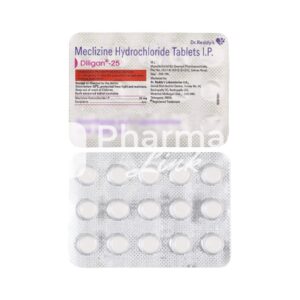
- Meclizine is available as tablets, chewable tablets, and in rare cases sublingual or buccal forms. Common strengths include 12.5 mg, 25 mg, and 50 mg.
- It usually starts working within about 1 hour after taking it.
- The duration of action is typically about 24 hours, which is why it is often taken once daily for motion sickness prevention.
- Alcohol should be avoided because it can increase drowsiness and other central nervous system effects.
- The most common side effects are drowsiness and dry mouth. Some people may also experience blurred vision, fatigue, constipation, headache, or dizziness.
- Would you like to try meclizine without a prescription?
Critical Safety Warnings, Patient Protection, And Canadian Precautions First
Basic Meclizine Information
- INN (International Nonproprietary Name): Meclizine, also spelled Meclozine in some regions.
- Brand names available in Canada (English): Bonamine.
- ATC Code: R06AE05.
- Forms & dosages: Tablet 12.5 mg, 25 mg, 50 mg; chewable tablet 25 mg, 50 mg; sublingual/buccal 25 mg, rare.
- Manufacturers in Canada (English): Not specified.
- Registration status in Canada (English): Health Canada approved as Bonamine.
- OTC / Rx classification: OTC in Canada for motion sickness products.
Who Should Not Use Meclizine Without Medical Advice
Meclizine is not a good fit for everyone, even if the label looks straightforward.
People with a known allergy to meclizine, meclozine, or other piperazine derivatives should not use it.
Children under six should not take it, and safety data are limited for children under 12.
Caution is also needed in severe hepatic or renal impairment, because the drug is metabolized by the liver and adverse effects may be harder to predict.
Canadian patients who need extra caution include older adults, pregnant people, and anyone with asthma, angle-closure glaucoma, prostatic hypertrophy, or urinary retention.
Those groups should check with a pharmacist or clinician first, especially if dizziness is already affecting balance or daily functioning.
- Red flags: allergy to meclizine, severe liver or kidney disease, child under six, repeated fainting, or dizziness that is not clearly motion-related.
- Call a pharmacist or doctor first: pregnancy, older age, asthma, glaucoma, urinary symptoms, other sedating medicines, or ongoing vertigo.
Safety Risks That Matter In Daily Life
The most common concern is drowsiness, and that can show up quickly after a dose.
Dry mouth, blurred vision, fatigue, headache, constipation, and confusion in older adults are also seen.
Alcohol and other sedatives can intensify central nervous system depression, which makes meclizine more risky during a shift, a late-night drive, or a winter walk on icy sidewalks.
Fall risk matters in Canada, where snow, slush, and boots can already make balance tricky.
Driving, workplace machinery, and even airport connections after a long layover deserve extra caution.
Can I Drive After Taking It In Canada?
Only if you know exactly how it affects you, and never if you feel drowsy, slowed down, or foggy.
If there is any doubt, arrange a ride, wait it out, or take the medication at a time when driving is not planned.
What Meclizine Is And How Canadians May Know It
INN, Spelling, And Brand Names
Meclizine is the International Nonproprietary Name, and meclozine is the alternate spelling used in some countries.
In Canada, the best-known brand listed in the product data is Bonamine.
Canadians who compare motion sickness medication online often see U.S. brand names such as Antivert, Bonine, and Dramamine Less Drowsy.
That is why searches like Bonamine 25 mg, meclizine for motion sickness, and meclizine for dizziness often point to the same ingredient.
Formulations And Package Labels
Meclizine is sold as tablets and chewable tablets, and in some markets a buccal or sublingual form may appear.
Canadian labelling can vary, and bilingual packaging may be seen in some provinces.
| Country Or Region | Brand Name | Typical Form |
|---|---|---|
| Canada | Bonamine | Tablet 25 mg |
| United States | Antivert, Bonine, Dramamine Less Drowsy, Travel-Ease | Tablet 12.5 mg, 25 mg |
| United Kingdom And Japan | Meclozine | Tablet 25 mg |
| Australia | Antivert | Tablet 25 mg |
| Germany | Reisetabletten-ratiopharm | Tablet 25 mg |
How Health Canada Classifies Meclizine
OTC Status And Product Access
Health Canada approves Bonamine, and motion sickness products are typically easier to access in Canada than in countries where prescription status is stricter.
In some places, the same medicine is prescription only, but Canadian access is usually more straightforward for travel use.
Availability can still vary by pharmacy and product line, so stock is worth checking before a trip.
DIN, Labelling, And Pharmacy Verification
A DIN, or Drug Identification Number, is the identifier Health Canada uses for approved drug products sold in Canada.
It helps confirm the exact product, strength, and manufacturer.
Before buying, verify the package, the strength, and the expiry date, especially if the product is being purchased for travel or for a provincial drug plan.
- DIN
- Drug Identification Number used in Canada to identify an approved drug product.
- OTC
- Over-the-counter; available without a prescription in many settings.
- Rx
- Prescription-only medicine.
- Monograph
- Official product information describing approved uses, dosing, risks, and storage.
What Meclizine Is Used For In Canada
Approved Uses
Meclizine is used for motion sickness and vertigo.
That is why it is commonly searched as motion sickness tablets or vertigo medication.
For many travellers, it is the medicine they reach for before a ferry ride, a road trip through the Rockies, or a winter flight with turbulence.
When It May Not Help
Not every dizzy spell is a good match for meclizine.
It may not help if the dizziness comes from dehydration, low blood sugar, infection, medication side effects, or a type of vertigo that needs a different treatment plan.
It is also not ideal for all inner-ear problems unless a clinician recommends it.
- Best fit: motion sickness prevention, some cases of vertigo, short-term travel use.
- Not a good fit: unexplained dizziness, severe dehydration, persistent vomiting, fainting, or chronic inner-ear symptoms without assessment.
Canadian Dosing Basics And How To Take It Safely
Standard Adult Dosing
For motion sickness, the typical adult dose is 25 to 50 mg taken one hour before travel, then repeated every 24 hours if needed.
For vertigo, the typical adult dose is 25 to 100 mg daily in divided doses, with a maximum daily dose of 100 mg.
Bonamine 25 mg is the most useful Canadian reference point for many patients comparing tablet strength.
| Indication | Typical Adult Dose | Maximum Daily Dose |
|---|---|---|
| Motion sickness | 25 to 50 mg one hour before travel | 100 mg |
| Vertigo | 25 to 100 mg daily in divided doses | 100 mg |
Practical Timing Tips
Taking the dose before symptoms start is usually the best approach for travel.
The lowest effective dose is the safest dose, especially if the plan includes a long drive, a work shift, or a day that already involves a lot of balance challenges.
Double-dosing is a common mistake when travellers forget a pre-trip dose and then take another one before boarding.
If the first dose feels too sedating, that is a clue to speak with a pharmacist before the next trip.
What If I Miss A Dose Under My Provincial Drug Plan?
Take it when remembered unless it is close to the next dose.
Do not double up.
If the dose was missed because symptoms improved, there may be no need to “catch up” at all.
- Before travel: pack the tablets, check the expiry date, take the dose about one hour before the trip, and avoid alcohol.
- During travel: watch for drowsiness, keep water nearby for dry mouth, and do not add extra doses without checking the label.
Dosing Adjustments For Age, Comorbidities, And Special Populations
Children And Older Adults
Safety data are limited under 12 years of age, and children under six should not use it.
Older adults should start at the low end, such as 12.5 mg, because sedation and anticholinergic effects are more likely.
Confusion, slowed reactions, and falls are more likely when meclizine is combined with other medicines that also cause sleepiness.
Liver, Kidney, And Common Canadian Comorbidities
Caution is advised in hepatic or renal impairment, and monitoring for adverse effects is sensible if organ function is reduced.
Practical concerns in Canada also include diabetes, dehydration during summer travel, fall risk in winter, and polypharmacy in older adults.
- Dose-caution groups: children under 12, older adults, pregnancy, hepatic impairment, renal impairment, asthma, glaucoma, urinary retention, and people taking several sedating medicines.
- Monitor for: daytime sleepiness, balance problems, dry mouth, blurry vision, confusion, and trouble urinating.
Side Effects Canadian Patients Should Watch For
Common And Expected Effects
Drowsiness is the side effect patients notice most often.
Dry mouth, blurred vision, fatigue, headache, vomiting, constipation, and confusion in the elderly are also reported.
These are the effects that usually drive the “Should I take it at bedtime?” question, even though meclizine is not meant to be used as a sleep aid.
When To Seek Help
Severe sedation, allergic reaction, urinary retention, confusion, or worsening dizziness deserves medical advice.
If symptoms are making it hard to walk safely, drive, or function at work, a pharmacist should review the product and the dose.
| Effect Type | Examples | What To Do |
|---|---|---|
| Common | Drowsiness, dry mouth, fatigue | Use caution, avoid alcohol, stay hydrated |
| Less common | Blurred vision, headache, constipation, vomiting | Check dose and timing, ask a pharmacist if persistent |
| Urgent | Confusion, allergic reaction, urinary retention, severe sedation | Seek medical help promptly |
Drug, Alcohol, And Food Interactions In A Canadian Lifestyle Context
Alcohol, Cannabis, And Sedating Medicines
Alcohol can increase central nervous system depression, so the combination is a bad idea if drowsiness would be unsafe.
Extra caution is needed with sleeping pills, opioids, benzodiazepines, sedating antihistamines, and cannabis products that also impair alertness.
Meclizine does not generally have strong medication interactions, but the sedating effect can stack quickly.
Coffee, Meals, And Travel Routines
Food timing usually matters less than the sedative combinations.
That said, many travellers still prefer to take it before a meal or snack because it fits into a pre-flight routine more easily.
The bigger issue is what happens after the dose: airport layovers, long-distance road trips, and late-night drives need a plan.
- Avoid or limit: alcohol, sleeping pills, opioids, benzodiazepines, and other sedating antihistamines.
- Check with a pharmacist: cannabis use, multiple allergy medicines, and any medicine that already causes drowsiness.
How Meclizine Works: Plain-Language And Clinical Explanation
Simple Patient Explanation
Meclizine helps reduce the signals in the body that can trigger motion sickness and dizziness.
For many people, that means less nausea on the road, on the water, or when the inner ear is making the room feel off-balance.
Clinical Terms And Class
Clinically, meclizine is an antihistamine for systemic use, and it belongs to the piperazine derivatives.
Its ATC code is R06AE05.
Because it has anticholinergic effects, dry mouth and blurry vision are easy-to-spot reminders that the medicine is active.
- Antihistamine
- A medicine that blocks histamine activity and can reduce allergy-related or motion-related symptoms.
- ATC code
- A drug classification code used internationally to group medicines by class and use.
- Anticholinergic
- An effect that can cause dry mouth, blurred vision, constipation, and urinary retention.
Meclizine Versus Other Motion Sickness And Vertigo Medicines In Canada
Alternatives Available Or Commonly Discussed
Canadian patients often compare meclizine with dimenhydrinate, promethazine, cinnarizine, and the scopolamine patch.
Those comparisons usually come up in searches like Dramamine Less Drowsy vs. Bonine, because people want the least sedating option that still works.
Dimenhydrinate is related and commonly used for motion sickness.
Promethazine is used for nausea and vertigo, but it is more sedating.
Cinnarizine is common in Europe and Asia.
Scopolamine transdermal is a patch used for prevention.
| Medicine | Main Strength | Main Drawback | Typical Use |
|---|---|---|---|
| Meclizine | Less drowsy than some options | Still causes sleepiness | Travel prevention, vertigo |
| Dimenhydrinate | Widely familiar | Can be more sedating | Motion sickness |
| Promethazine | Strong anti-nausea effect | More sedating | Nausea, vertigo |
| Cinnarizine | Used in many regions | Availability varies | Motion sickness, vertigo |
| Scopolamine patch | Convenient for longer travel | Patch-specific use | Prevention |
- Pros: simple dosing, travel-friendly, useful for motion sickness prevention.
- Cons: drowsiness, dry mouth, blurred vision, and not every dizzy spell responds to it.
Real-World Canadian Access: Where To Buy And What To Expect
In-Store Access
Meclizine may be found at national pharmacy chains such as Shoppers Drug Mart, Rexall, Jean Coutu, and London Drugs.
Stock, strength, and brand availability can vary by province and store.
For a Friday-evening trip, that can mean checking ahead instead of assuming the shelf will be full.
Online Pharmacies And Provincial Restrictions
Legitimate Canadian online pharmacies should verify product details carefully and ask for a prescription upload where needed.
Cross-border websites can be risky because the package, strength, and regulatory status may not match Canadian expectations.
In our online pharmacy, meclizine is available without a prescription, with discreet delivery to Canada in 5 to 14 days.
- Safe purchase checklist: Canadian pharmacy contact details, product strength shown clearly, expiry date visible, secure checkout, and clear return or support information.
- In-store vs online: in-store gives immediate access, while online can help with convenience and privacy when the trip is not tomorrow.
Provincial Coverage And Out-Of-Pocket Costs
Coverage Realities In Canada
Coverage depends on the plan, the diagnosis, age, income, and formulary status.
Examples include Ontario Drug Benefit, BC PharmaCare, and RAMQ in Quebec.
Some plans cover meclizine only in specific situations, while others may not cover travel use at all.
Patient Cost Comparison Table
| Province Or Plan | Typical Coverage | Typical Patient Cost | Prescription Required? |
|---|---|---|---|
| Ontario Drug Benefit | Depends on eligibility and formulary status | Varies | Sometimes |
| BC PharmaCare | Depends on coverage group and product listing | Varies | Sometimes |
| RAMQ | Depends on plan and indication | Varies | Sometimes |
| Private insurance | Depends on benefit design | Varies | Sometimes |
To confirm coverage, check the DIN, ask the pharmacy to run the claim, and review the plan formulary before travel.
What The Evidence Says About Effectiveness And Safety Monitoring
What Studies And Reviews Generally Show
Meclizine is established as a motion sickness and vertigo medicine, and the main trade-off is drowsiness.
That profile is why many patients choose it when they want a practical, travel-ready option.
Canadian Pharmacovigilance And Safety Updates
Canadians should check pharmacy guidance and Health Canada advisories for rare safety updates.
For most people, the key safety steps are still the familiar ones: start low, avoid alcohol, and watch for sedation.
- It is used for motion sickness and vertigo.
- Drowsiness is the main side effect to plan around.
- Older adults and people with comorbidities need closer review.
- Health Canada and pharmacy guidance should be checked for updates if symptoms change.
Storage, Transport, And Travel Handling In Canada
Home And Travel Storage
Store meclizine at 20 to 25 degrees Celsius, protect it from moisture and light, and keep it in the original packaging.
That matters whether the medicine sits in a bathroom cabinet, a carry-on, or a road-trip bag.
Seasonal And Travel Considerations
Summer heat can damage tablets left in a parked vehicle.
Winter is not much better if the medicine sits in a glove compartment overnight.
Luggage, hotel rooms, and travel pouches are safer than a hot dashboard or a frozen car.
- Do: keep tablets dry, protected from light, and in the original pack.
- Do not: leave them in a car, glove compartment, or damp bathroom.
Proper Use Guidance From Canadian Pharmacists
How To Use It Well And Safely
The safest approach is simple: use the lowest effective dose, plan ahead for travel, and avoid alcohol.
Meclizine is not meant to be a sleep aid or a casual sedative, even though that is sometimes how it gets misused.
Taking it early enough before travel gives it a better chance to work without encouraging extra doses later.
When To Ask A Pharmacist Or Clinician
Questions are especially important in pregnancy, chronic vertigo, frequent travel, older age, multiple medicines, glaucoma, urinary symptoms, or ongoing dizziness.
Those are the situations where a short pharmacist review can prevent a bad fit or an unsafe combination.
- Ask before use: pregnancy, asthma, glaucoma, urinary retention, older age, severe liver or kidney disease, multiple sedating medicines, or vertigo that keeps coming back.
- Self-monitor: sleepiness, dry mouth, blurred vision, constipation, confusion, and balance problems.
Delivery Across Canada (English)
| City | Region | Delivery Time |
|---|---|---|
| Toronto | Ontario | 5-7 days |
| Ottawa | Ontario | 5-7 days |
| Mississauga | Ontario | 5-7 days |
| Hamilton | Ontario | 5-9 days |
| Winnipeg | Manitoba | 5-7 days |
| Calgary | Alberta | 5-7 days |
| Edmonton | Alberta | 5-7 days |
| Vancouver | British Columbia | 5-7 days |
| Surrey | British Columbia | 5-9 days |
| Victoria | British Columbia | 5-7 days |
| Quebec City | Quebec | 5-7 days |
| Montreal | Quebec | 5-7 days |
| Halifax | Nova Scotia | 5-7 days |
| St. John’s | Newfoundland and Labrador | 5-9 days |